Achkan vs Sherwani: A Fashion Insider’s Guide to India’s Most Regal Silhouettes
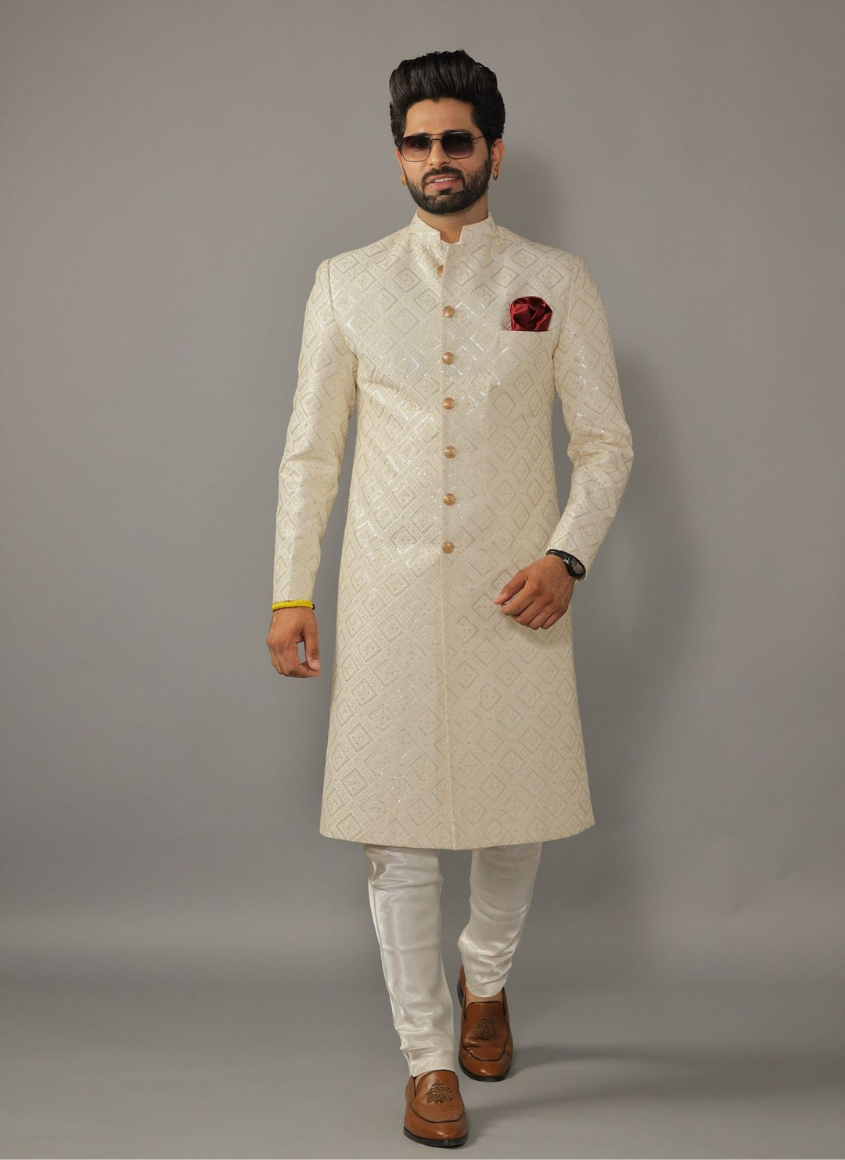
The ongoing debate between the Achkan and Sherwani in Indian luxury menswear has been around for some time. The debate between Achkan vs. Designer Sherwani for Men continues to be one of the most popular clothing debates.
Although on the surface they look very similar, to those who have an understanding of fashion, the Achkan and Sherwani portray two very distinct style philosophies when it comes to dressing.
One philosophy expresses restraint and tradition, while the other focuses more on image and celebration. The achkan and sherwani perfectly demonstrate the range of royal style within Indian culture, and as such, hold equal weight within this spectrum.
What is Achkan?
The achkan for groom is all about understated royal grace, and is a look of confidence that is simply sewn into the garment. For Achkan wearers, the elegance of the garment is not always proclaimed, and, therefore, exudes quietness and tranquillity.
Traditionally, Achkans are constructed close to the body and fall at the knee. This gives them a very tailored, clean, and formal appearance; therefore, they are thought of as being a reflection of refinement as opposed to extravagance.
Achkans have always been associated with regal authority, and as such, were originally worn by the Mughals and their court parties, but have now also become popular with many other well-known, influential people in the modern world.
Achkans are considered to represent the old-money luxury aesthetic of fashion in today’s modern world. In contemporary Indian fashion. Achkans are now being re-interpreted and designed to be worn to formal daytime Wedding Wear for Men and other various cultural and diplomatic gatherings. All these factors make Achkan best among men’s dress for wedding function.
What is a Sherwani?
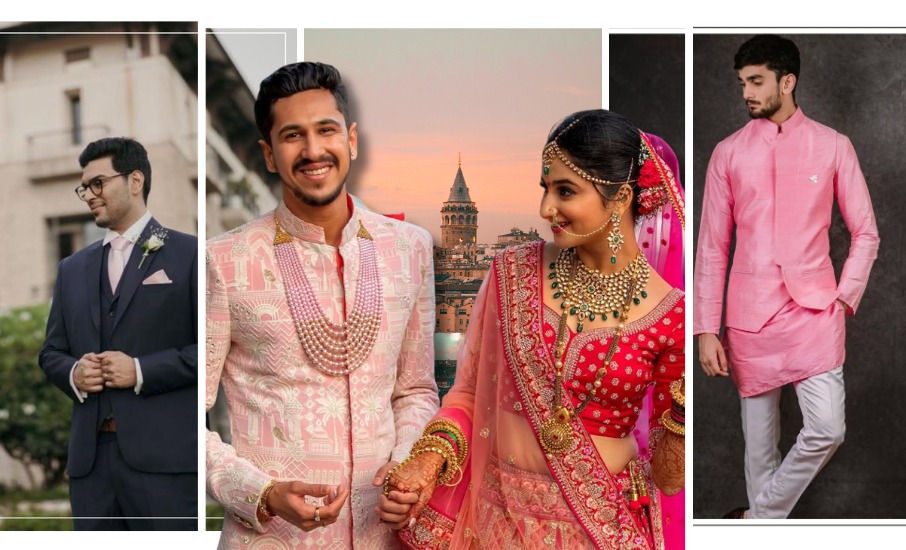
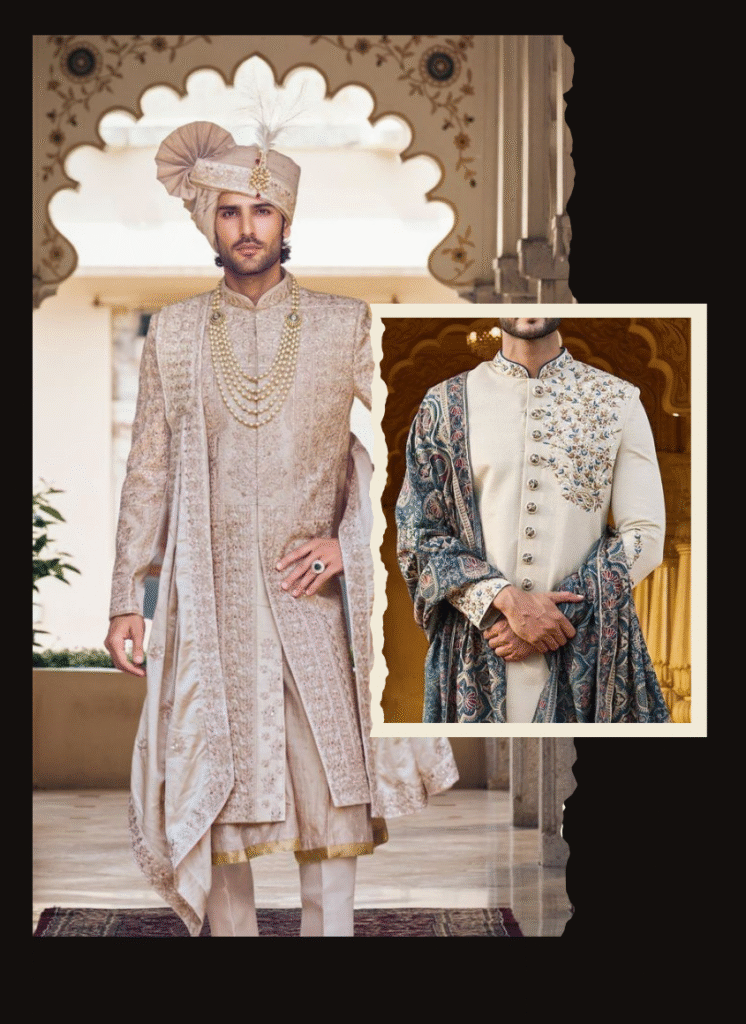
The Sherwani gives off a sense of authority, while the Achkan gives off an air of admiration and appreciation. While it can be described as longer, thicker, cooler in summer, and more ornate, the Sherwani has traditionally been worn for the most important public occasions. The Sherwani was created for grooms, royalty and other important participants in the event.
The Sherwani is made to draw attention to the man wearing it. It gives him a commanding presence and is primarily concerned with his ability to fill whatever space he occupies with an imposing presence. It allows the wearer to stand out in photos and has a significant influence on how tradition defines his behaviour at celebrations.
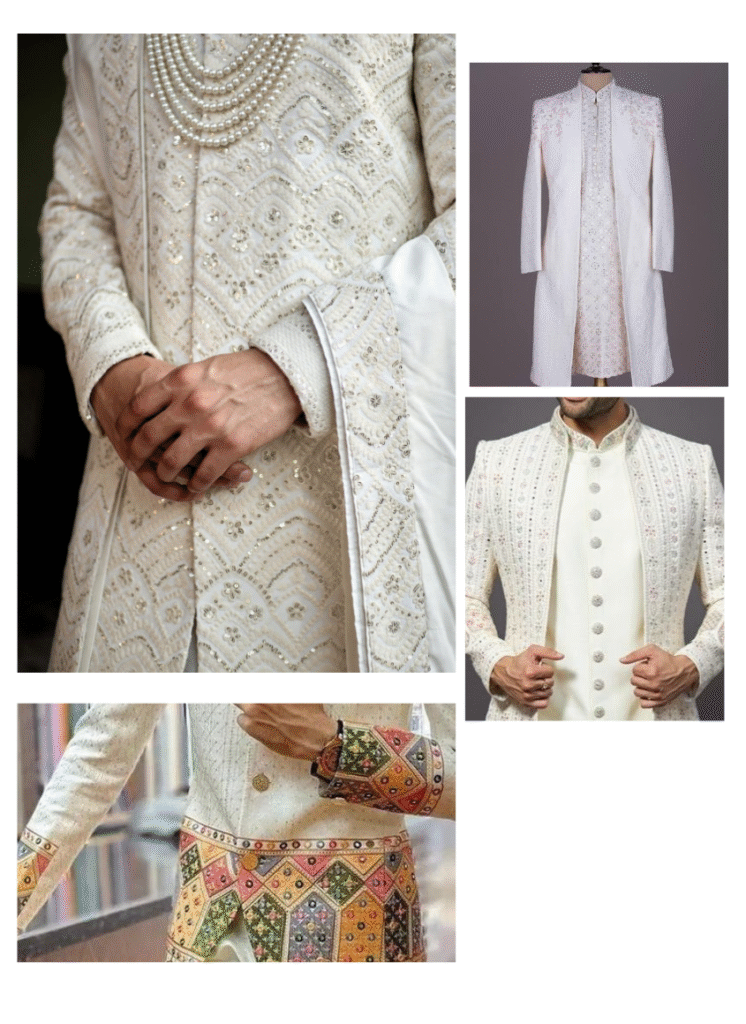
Sherwanis have also developed into a platform for complex couture craftsmanship using intricate hand-embroideries, heirloom textiles, and bold colour palettes.
History and Cultural Origin- Difference Between Achkan and Sherwani
Achkan: Courtly Refinement
The Mughal period saw the emergence of the Achkan as a result of the evolution of previous clothing items, such as the Angarkha. The Achkan was worn in court as a formal outfit, and was stylish, elegant, and practical.
The achkan for groom became known as a North Indian Royal Clothing style, and became associated with the well-educated elites during both the Colonial and post-independence periods.
The Achkan was worn by leaders and scholars as well as professional people, and its association with leaders and academics helped solidify its reputation as an outfit of intellect, discipline and power. Out of all sorts of Achkans available in the market, the black achkan has its own aura and charm.
Sherwani: Regal Evolution
The Sherwani was developed during the late 1700s and early 1800s with influences from the long Persian coat and formal British clothing. This cultural item soon became used by the elite class of India in ceremonies, particularly weddings and state events.
As weddings became increasingly extravagant, so too did the Sherwani become the traditional style for grooms, symbolising abundance, festivity and the ongoing nature of tradition.
Key Design Elements & Fabrics- Achkan vs Sherwani
Achkan for Groom Style
- Length: Below the knee or just above.
- Fit: Slim, fitted, tailored, body-skimming.
- Structure: Minimal padding, clean/plain lines.
- Closure: Decorative buttons (often fabric-covered or antique).
- Fabric Collection: Silk blend, jamawar, brocade, wool/silk, cotton/silk.
- Surface Work: Tonal embroidery with subtle zari and fine threadwork.
Craftsmanship is paramount in having the best Achkans.
Sherwani Style
- Length: Mid-calf to down to the ankle.
- Fit: Structured/layered/weighty Construction.
- Structure: Padded shoulders, rich-lined interiors.
- Closure: Decorative buttons and sometimes concealed buttons.
- Fabrics: Raw silk, velvet, jacquard, dupion (raw silk) and heavy brocade.
- Surface Work: Zardozi, Resham, sequins, mirror work and hand embroidery.
Opulence in a Sherwani format.
Colour Palette & Aesthetic- Achkan vs Sherwani
Colors of Achkan
Most achkan for groom are designed out of classic, understated, yet elegant hues
such as:
- Ivory, off-white/beige
- Powder Blue, Sage Green, Blush Pink
- Charcoal, Midnight Blue, Muted Maroon, and black Achkan
Sherwani’s Colour Palette
The colour palette of a Sherwani is designed to celebrate the grandeur and celebratory nature of the Sherwani; colours such as:
- Ivory and Gold
- Deep Maroon/Wine; Emerald
- Royal Blue, Champagne, and Black
are found in the greatest quantity due to the vibrancy they convey.
Achkan vs Sherwani- Key Differences
- Visual Impact: Achkan has a muted effect, while Sherwani has a commanding presence.
- Length and Weight: Achkan is shorter and weighs less than Sherwani. A Sherwani is longer and heavier than an Achkan.
- Occasions: Achkan is suitable for formal daytime functions, while Sherwani should be worn for ceremonial occasions.
- Design Philosophy: Minimal refinement versus Maximal celebration.
- Styling Approach: Modern Elegance versus Traditional Opulence.
Achkan vs Sherwani- Styling Tips from a Fashion Lens
Styling an Achkan:
- An achkan for groom is best worn with churidars that are slim-fitting or tailored pants.
- Leather mojaris or simple juttis are a great option for shoes.
- When it comes to accessories, use minimal decoration. A brooch, watch, or pocket square will work well.
- For cold weather, a tonal stole will provide additional sophistication.
Make sure your overall look is editorial, effortlessly elegant, and very polished.
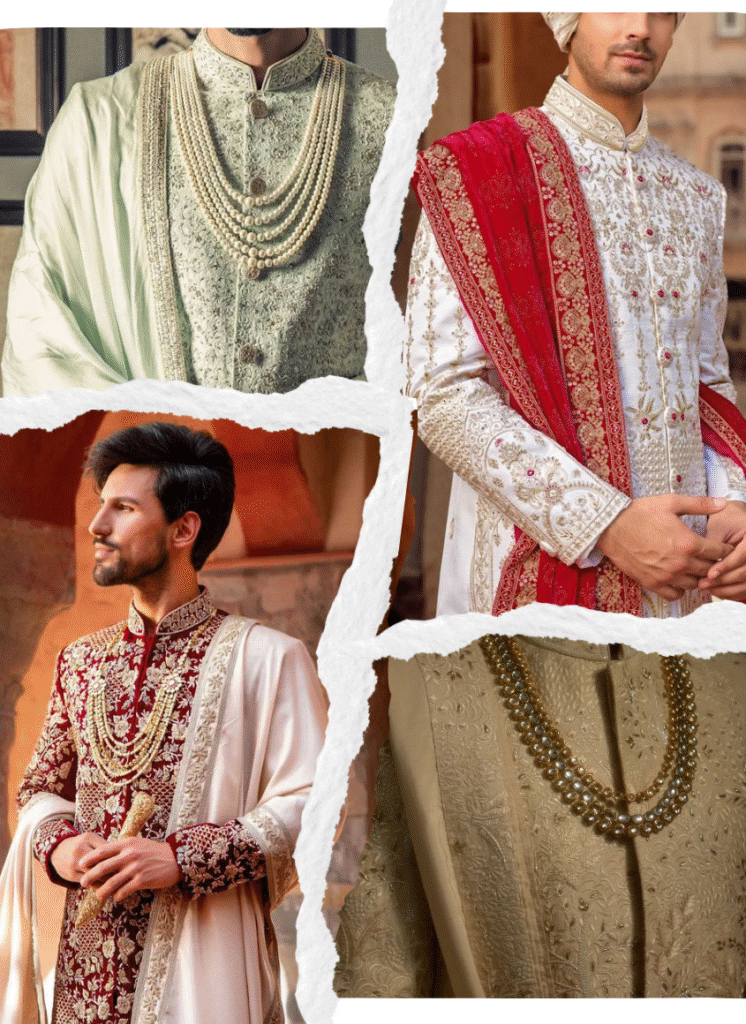
Styling a Sherwani:
- To achieve the maximum drama with a Sherwani, wear churidars or dhoti pants.
- The addition of the dupatta across the shoulder will give you a more dynamic movement as you walk.
- Try adding a safah or turban to complete the ‘royal’ look.
- Feel free to go all out with your jewellery, layering necklaces, and getting funky with your statement footwear.
The goal here is to definitely go for a “maximalist” look.
Achkan vs Sherwani- Which One Should You Wear?
As you found out, there are many difference between achkan and sherwani. If your style leans toward refined minimalism, intellectual elegance, and quiet authority, choose the Achkan.
If the occasion requires grandeur, and you are to be the visual centre of the celebration, choose the Sherwani.
Conclusion
The Achkan and Sherwani are not competing garments; they are complementary expressions of Indian luxury fashion. One expresses its heritage through restraint, and the other expresses its heritage through celebration. Men today can use both garments to dress thoughtfully, contextually, and with confidence.
Because in fashion, it’s more than just what you wear It’s about why you wear it. That’s it in this blog on Achkan vs Sherwani. Whether you’re looking for Achakan or Sherwani, Armour Bespoke is the best place for all sorts of custom-made dresses for your daily wear, or special days.